Alaska’s Staggering Prices May Cost Trump as Gas Spikes at $26 Per Gallon and Basic Paper Plates at $54
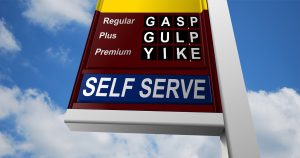 Alaska’s cost of living is surging beyond reason and might prove yet another challenge for Trump-backed senator Dan Sullivan’s re-election bid.
As groceries, gas and diesel prices in the Last Frontier are skyrocketing, Democratic challenger Mary Peltola has found a way to blame the Republican incumbent.
In late August, a store in the village of Shungnak in Alaska’s Northwest made headlines after revealing an eye-popping price of $26.82 per gallon of regular gas.
Recently, the price was $13.99, but now it is 26.82,’ Douglas told the Alaska Beacon.
This price does reflect the highest cost for gasoline in the region … for now. Unfortunately, prices for gasoline and diesel are expected to increase once communities receive their fall barge deliveries.
In addition, grocery costs in Alaska are almost 24 percent higher than the US average… (Continue to full article)
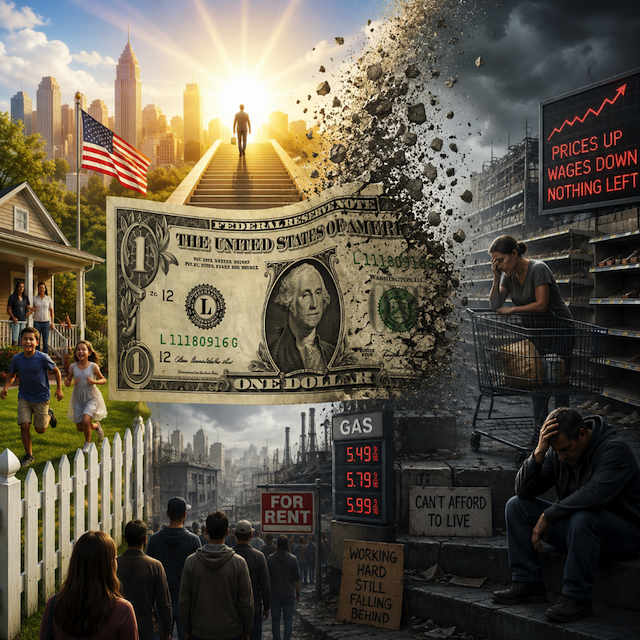 Ex-FBI Boss Tells Americans to Take Warnings to Stock Up Seriously
The former Deputy Director of the FBI has issued an urgent warning to Americans as countries worldwide start stockpiling supplies for a potential crisis.
Dan Bongino, who left the bureau in January, said the public needs to do what the UK and European governments are telling citizens: Have a preparedness plan and at least three days of food and power ready.
‘Have yourself an emergency radio, have yourself some batteries, get yourself some emergency food, get yourself a rain collection and water filtration, some filtration tablets,’ he said on Monday.
Get your stuff today. Please. Do it for your family!!
Bongino, who has also worked for the Secret Service and NYPD, said preparing in advance could reduce anxiety and prevent families from finding themselves without essentials when a crisis strikes…(Continue to full article)
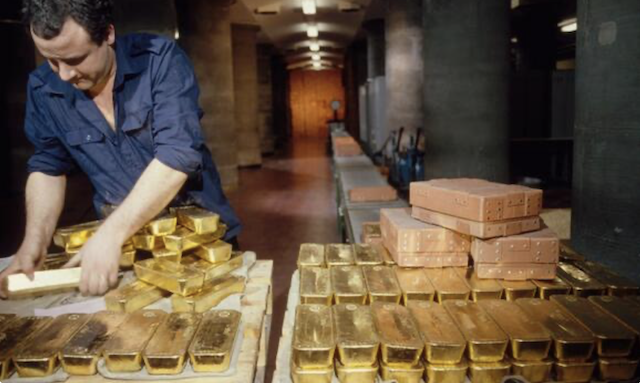 The U.S. Has the World’s Largest Gold Reserves – Worth $1 Trillion at Market Rates… but Repricing That Hoard ‘Would Backfire in a Big Way’
With the federal budget deficit at $2 trillion and debt-interest costs topping $1 trillion a year, it may be tempting to look for extra cash under the sofa cushions.
Urgency has grown in recent months as Treasury yields have soared to the highest levels in more than 20 years, putting more pressure on interest expenses.
The Treasury Department has tried some unconventional measures recently to take the heat off yields, including buybacks of more long-dated debt and its intervention to prop up the yen that let Japan avoid selling its Treasuries.
Given such surprises, speculation has grown around even more far-out tactics. One idea that comes up from time to time is for the Treasury Department to price its immense gold holdings at market rates.
The U.S. has the world’s largest gold reserves, which total about 261.5 million ounces, or more than double what No. 2 holder Germany has. But the U.S. hoard’s official price was set by Congress in 1973 at $42.22 per ounce, and it hasn’t changed since… (Continue to full article)
 We Are Being Warned That Our “Window To Prepare” Is Closing – What Would The Survival Rate Be If The Power Grid In The U.S. Went Down For 6 Months?
There is growing anticipation that something really big is about to happen. Social media is buzzing about the fact that so many governments around the world are urging their citizens to stockpile food, water and other essential supplies right now. Why have all of those governments suddenly developed such a sense of urgency? I wish that I knew, but without a doubt global events have begun to spiral out of control.
Our world is facing crisis after crisis, and most of them have erupted in the last 12 months. The U.S. and Israel are preparing to bomb the living daylights out of Iran after the midterm elections, and the Iranians are making all sorts of apocalyptic threats in response. The Russians and the Ukrainians are absolutely pummeling one another with missiles and drones, and European leaders are being encouraged to consider sending troops into Ukraine.
Cyberattacks have become much more sophisticated and much more frequent, and AI agents are infiltrating financial systems worldwide. Meanwhile, we are facing a global energy crisis, a global fertilizer crisis and a global food crisis simultaneously. On top of everything else, the most powerful Super El Niño ever recorded is causing monster storms, epic droughts and horrific wildfires all over the planet.
Unfortunately, many are warning that things could soon get far worse… (Continue to full article)
 Food Shortages In 2027? The ICC Warns That Global Food Prices Could Rise By Close To 70% – I Asked AI What Would Happen Next
Economists define money as a generally-accepted medium of exchange. It is one of mankind’s greatest discoveries.
Money solves the problem of the double coincidence of wants. A farmer sells his wheat for something widely accepted in exchange, then uses it to buy shoes. The shoemaker doesn’t want wheat but accepts the money because he knows others will accept it from him.
People pursuing their individual interests discover that certain goods are more readily accepted than others. Carl Menger explained how money could emerge spontaneously from this process.
Alan Greenspan added this:
Gold and silver eventually became important monetary commodities because they possessed characteristics useful in exchange: durability, divisibility, portability, recognizability, and relative scarcity. . . .
The commodity chosen as a medium must be a luxury. Human desires for luxuries are unlimited and, therefore, luxury goods are always in demand and will always be acceptable. Wheat is a luxury in underfed civilizations, but not in a prosperous society. Cigarettes ordinarily would not serve as money, but they did in post-World War II Europe where they were considered a luxury. The term “luxury good” implies scarcity and high unit value. Having a high unit value, such a good is easily portable; for instance, an ounce of gold is worth a half-ton of pig iron.
Money was originally a means by which strangers could cooperate without knowing or trusting one another personally. And therein lies its genius.
Money can be exchanged for almost anything offered for sale. But it is not the same as wealth… (Continue to full article)
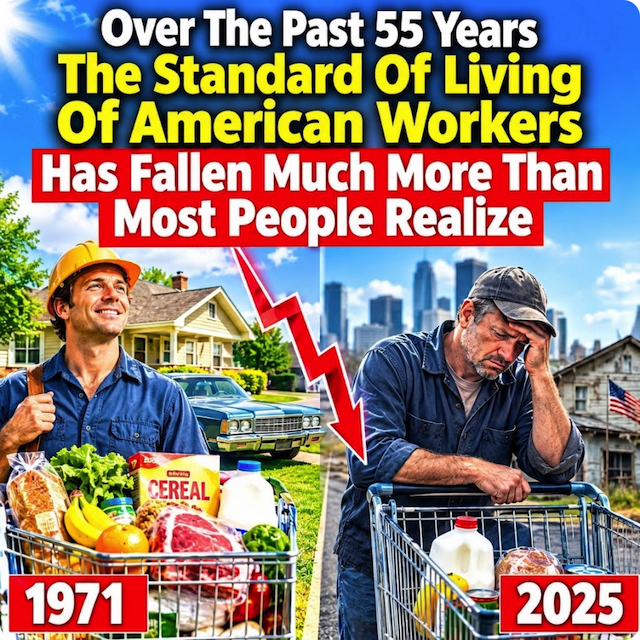 Over The Past 55 Years, American Workers’ Standard Of Living Has Fallen Much More Than Most People Realize
If you go to bed at night worried about money and you get up in the morning still worried about money, you are far from alone. In 2026, financial stress is an inescapable reality for most Americans. There is still a very small segment of the population that is doing really well, but the vast majority of us are just trying to find a way to scrape by from month to month. When you work as hard as you can and it just isn’t enough, it can be absolutely soul crushing.
As I discussed last week, 44 percent of Americans struggle to even afford the most basic necessities. We can all feel that the middle class is steadily eroding, and in this article I am going to share some shocking new numbers that absolutely prove that this is happening.
When I was growing up, it seemed like almost everyone was living a middle class lifestyle. Homes were very affordable, nobody had anxiety about paying for healthcare, gasoline was extremely cheap, and grocery prices were not a concern at all.
Beef was so cheap in those days, and we ate like kings.
But now who can afford to eat beef on a regular basis?
Perhaps the wealthy can, but for most of us a simple visit to the grocery store is very painful.
In fact, many Americans now skip meals on a regular basis just to save money… (Continue to full article)
Central Banks Around the World Are Quietly Stockpiling Four Times as Much Gold as Usual and Are Moving It Out of the U.S.
The long-standing allegiances between global powers have been tested over the past few years. Wars between Russia and Ukraine, and between the U.S., Israel, and Iran in the Middle East, have pushed governments around the world to signal where their loyalties lie—even when the conflicts are domestically unpopular and far removed from their own borders.
And that’s before you get to President Trump’s tariff agenda and the trade battles that have ensued because of it.
So it is perhaps no wonder that, under the radar, central banks across the world are stocking up on the safe-haven asset of gold, and they don’t want to share where they’re keeping it…. (Continue to full article)