…and just WHO pays for all of this???
While illegal immigrants are restricted from many welfare programs, their children born in America do not face such limitations. Households headed by illegal immigrants and have U.S.-born children are more likely to use welfare than households led by U.S.-born individuals, according to a recent report by the Center for Immigration Studies (CIS).
At least 59.4 percent of illegal immigrant-led homes use one or more welfare programs, compared with 39 percent of households headed by people born in the United States, according to the CIS report. Continue reading
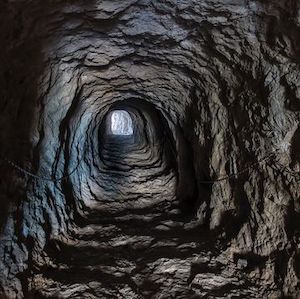
 The Lost Dutchman’s Gold Mine has been the source of intrigue and mystery for treasure seekers for generations. Situated in the forbidding Superstition Mountains of Arizona, the legend of the mine is rooted in tales of immense gold deposits and the tragic fates of those who sought to claim them. The mine, named after the German prospector Jacob Woltz, who reportedly found it in the 19th century, has never revealed its location, keeping its fortune a secret and igniting a fervor of exploratory quests.
 For the last 2 1/2 years, price inflation has been eating away the paychecks and savings of the public.
 Some have suggested that the 70s economy under the peanut farmer, Jimmy Carter, was worse, but I don’t see it. Not nearly so many were out of work as there are today – some 106 million – and even as young as I was, I wasn’t without a job from the time I was thirteen and toting shingles for one of our local roofers. Whatever is happening across the board, it’s almost as if some black plague has hit at the heart of our economy and businesses aren’t quite as willing to give new entry level workers as much as a chance as what I witnessed during the 1970s, much of which stems from corporation’s current lack of tolerance for anyone who is unwilling to go along with political correctness and the Woke ideology that’s being forced down everyone’s throat.
  Sen. Bob Menendez (D-NJ) is weathering
  America in the twenty-first century has been on an accelerating descent not unlike what befell ancient Rome. For some four centuries Rome’s Senate and constitution provided continuity which sustained the Roman Republic through various challenges. But in the end, what befell Rome from barbarian invasion, political corruption, and mobs that were manipulated and used by its Caesars, was a rampage against reason and freedom, leading to the Republic’s demise and transition to a centralized imperial authority under emperors.
 A greedy guest who will help themselves to the entire Thanksgiving day feast with no regards to the family sitting around the table. This uninvited guest stealing the turkey and pie right off of your very plate is named inflation.