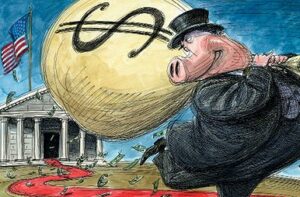
If you’re going to go out, you might as well go out in style. Our national debt stood at $31,467,639,287,894.39 at the start of June. It is now worth $33,476,530,987,617.43. That implies that in just three months, we have added nearly two trillion dollars to the national debt.
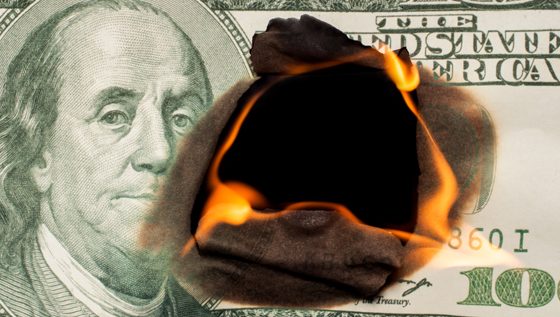
We are in debt trouble. Photo by Richelleg/canva
It is the largest single debt in our planet’s history, and it will never be paid off. Our debt spiral has reached its terminal point, and the only thing we can do now is prolong the suffering. We destroyed the beautiful future that our children and grandchildren were meant to have a long time ago, so what we do now doesn’t really matter.
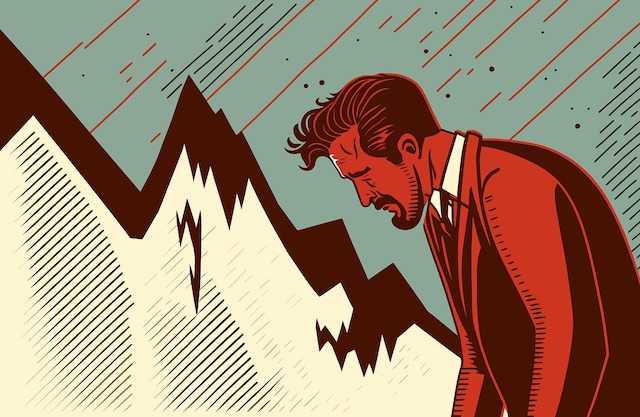 History is starting to repeat itself. In 2008, bond prices crashed before stock prices did. Here in 2023, bond prices are crashing again. In fact, we are currently witnessing one of the greatest financial crashes in U.S. history at this moment. Of course most Americans have absolutely no idea that this is happening. Most Americans don’t know anything about the bond crash that is causing a tremendous amount of fear in the financial community right now, and that is because the big news networks aren’t talking about it too much. But it is serious. Since the peak of the market, 10 year bonds are
  The gold market may not be able to break out of its neutral trading channel around $1,950 just yet, but
  When Silicon Valley Bank and other banks failed earlier this year, the debate over the sustainability of fractional reserve banking resurfaced. Under fractional reserve banking, banks keep only a fraction of customers’ deposits in reserve. The difference is bank credit, such as government debt, mortgages, business loans, and many other kinds of loans. This practice leaves the bank open to a run, in which panicky depositors attempt to withdraw their funds from the bank en masse but the bank doesn’t have the cash on hand.
  Banks have now reported having more than $309 billion in unrealized losses for the second quarter ending on June 30 alone.
 Even as interest rates skyrocketed over the past 18 months, a good job market and strong consumer spending kept the US economy moving.
 Banks are closing branches faster than they’re opening new ones. U.S. banks closed over 3,000 branches last year while opening just 1,000. JPMorgan Chase led in branch closures last year, shuttering 144 branches, while opening 133. The trend will likely continue as banks face staunch competition for deposits and younger customers from online banks, fintech firms and Big Tech.
  Our standard of living is being systematically destroyed, but for a lot of years many Americans didn’t fully understand what was taking place because it was happening so slowly. But now we have reached a stage where the purchasing power of our money is collapsing and the cost of living has become exceedingly painful. Thanks to our rapidly rising cost of living, the middle class is becoming “the impoverished class”, and the poor are increasingly being pushed out into the streets. If we do not find a way to turn these trends around, it won’t be too long before we have tremendous societal turmoil on our hands.
  The Conference Board’s index is a composite of ten so-called “leading indicators.” These are gauges of economic activity and sentiment that tend to move up or down several months before overall economic growth indicates an acceleration or a slowdown.
  As I read about the demise of the U.S. dollar’s status in world trade, I’m struck by the misdirection and irrational “thinking” employed by our politicians and bureaucrats. In