~ Search ~
-
-
Kettle Moraine, Ltd.
P.O. Box 579
Litchfield Park, AZ 85340
602 - 799 - 8214
KettleMoraineLtd@cox.net -
~ NOTICE OF COPYRIGHT ~
The original work on this site is licensed under a Creative Commons Attribution-Noncommercial-No Derivative Works 3.0 US License.
We make every attempt to respect the rights of others. If you feel that something here has infringed your work please let us know and we will correct it immediately. It is not always easy to determine the status of material posted to the Internet with regard to fair use and public domain.
~ FAIR USE NOTICE ~
This site contains copyrighted material the use of which has not always been specifically authorized by the copyright owner. We are making such material available in our efforts to advance understanding of environmental, political, human rights, economic, democracy, scientific, and social justice issues, etc. We believe this constitutes a ‘fair use’ of any such copyrighted material as provided for in section 107 of the US Copyright Law. In accordance with Title 17 U. S. C. Section 107, the material on this site is distributed without profit to those who have expressed a prior interest in receiving the included information for research and educational purposes. For more information go to: http://www.law.cornell.edu/uscode/17/107.shtml
Copyright Kettle Moraine, Ltd. 2017 – 2026
Why Wall Street Is Buying So Many U.S. Homes
The Best Way to Buy Precious Metals
Secrets That Precious Metals Dealers Don’t Want You to Know
It seems like everywhere you go people are talking about Gold and Silver. Why would people care so much about what some people call a “barbaric relic”?
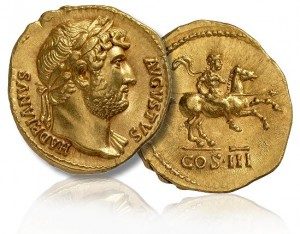
History
Gold and Silver are the only money used in the Bible – a six thousand year history. Worldwide, Gold and/or silver have been the foundation of every successful economy. Nations that adopted “fiat” currency – paper money backed by nothing, but enforced by the government – have failed. In fact, the lifespan of fiat currencies internationally has been an average of a mere 37 years. Closer to home, the Founding Fathers set Gold and Silver as the only Constitutional money. It took what many consider to be unconstitutional government action to change those provisions of the Constitution. Continue reading
YO – Babee Jane
No Gold? You can’t afford this one!
Gold as a Deflation Hedge
United States (1930s)
 “The inability to predict outliers implies the inability to predict the course of history. . . But we act as though we are able to predict historical events, or, even worse, as if we are able to change the course of history. We produce thirty-year projections of social security deficits and oil prices without realizing that we cannot even predict these for next summer — our cumulative prediction errors for political and economic events are so monstrous that every time I look at the empirical record I have to pinch myself to verify that I am not dreaming. What is surprising is not the magnitude of our forecast errors, but our absence of awareness of it.” ~ Nicholas Taleb, The Black Swan – The Impact of the Highly Improbable
Continue reading
Corruption’s Self-Inflicted Wounds
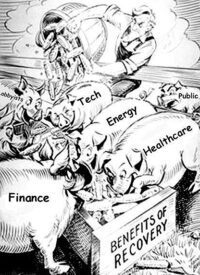 “Everywhere Rome was failing in her duties as mistress of the civilised world. Her own internal degeneracy was faithfully reflected in the abnegation of her imperial duties. When in any country the small-farmer class is being squeezed off the land; when its labourers are slaves or serfs; when huge tracts are kept waste to minister to pleasure; when the shibboleth of art is on every man’s lips, but ideas of true beauty in very few men’s souls; when the business-sharper is the greatest man in the city, and lords it even in the law courts; when class-magistrates, bidding for high office, deal out justice according to the rank of the criminal; when exchanges are turned into great gambling-houses, and senators and men of title are the chief gamblers; when, in short, ‘corruption is universal, when there is increasing audacity, increasing greed, increasing fraud, increasing impurity, and these are fed by increasing indulgence and ostentation; when a considerable number of trials in the courts of law bring out the fact that the country in general is now regarded as a prey, upon which any number of vultures, scenting it from afar, may safely light and securely gorge themselves; when the foul tribe is amply replenished by its congeners at home, and foreign invaders find any number of men, bearing good names, ready to assist them in robberies far more cruel and sweeping than those of the footpad or burglar’—when such is the tone of society, and such the idols before which it bends, a nation must be fast going down hill.
A more repulsive picture can hardly be imagined. A mob, a moneyed class, and an aristocracy almost equally worthless, hating each other, and hated by the rest of the world; Italians bitterly jealous of Romans, and only in better plight than the provinces beyond the sea; more miserable than either, swarms of slaves beginning to brood over revenge as a solace to their sufferings; the land going out of cultivation; native industry swamped by slave-grown imports; the population decreasing; the army degenerating; wars waged as a speculation, but only against the weak; provinces subjected to organized pillage; in the metropolis childish superstition, whole sale luxury, and monstrous vice. The hour for reform was surely come. Who was to be the man?”
A.H. Beesley, The Gracchi Marius and Sulla, 1921
NOTE: The Gracchi brothers were Roman reformers in the second century BC, about seven hundred or more years before the fall of Rome itself.
Leibowitz: The rich aren’t interesting — until they are
 We grew up poor. I was the first son of married teenagers who lived in a three-room apartment in New York. My brother and I shared the bedroom and bunk beds until I was 12 and he was 9.
Our parents slept in the living room on a fold-out couch from Levitz. Our mother ironed patches over the knees of the jeans we bought at Sears not because that was the style, but because we couldn’t afford anything better.
Finally, about the time I hit my teenage years, we made it to lower middle class. I even got a couple pairs of Levi’s and Pro Keds as proof.
Fast forward 40-odd years. I’m not poor anymore. Yet I still find myself not trusting — or much liking — the rich. Maybe it’s envy. Continue reading
REDUX: Turk – Saving REAL Money
 June 11, 2013 ~ Up until the late 1960s, it was considered prudent for everyone to have some savings. By forgoing consumption, savings gave the ability to consume more at a later date through the accumulation of interest income.
This result is similar to what one hopes to achieve with an investment, but savings and investments should not be confused. A person uses money to make an investment, whereas saving is the process of accumulating money itself. Thus, you put your money at risk when making an investment, which hopefully will become a wealth-creating asset. In contrast, savings are meant to be riskless.
In the past, savings would typically be accumulated in a disciplined way on a regular monthly basis. An individual would take a savings book along with some cash directly to the bank, which would record the deposit. Alternatively, the bank acting under standing instructions would transfer a previously specified amount of cash from a customer’s current account to his/her savings account. Continue reading
The End of World Dollar Hegemony: Turning the USA into Weimar Germany
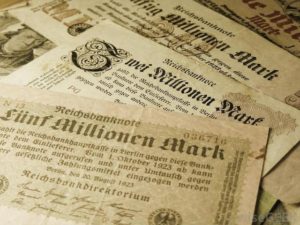 In a recent essay, I explained how over time the US abused its responsibility to control the supply of dollars, the world’s premier reserve currency for settling international trade accounts among nations. This abrogation of its duties is leading to the likely adoption of a new reserve currency, commodity based and controlled not by one nation but by members, all watchful that the currency is not inflated. Continue reading
Here we go again…
Just when I’ve begun to get myself together… ~ Dolly Parton
 The Commerce Department on Wednesday said that consumer spending grew by 1.3 percent compared with September, when spending was unchanged with the prior month. Compared with a year ago, retail sales were up 8.9 percent. Total sales for the August through October period were up 8.9 percent compared with the three-month span a year ago.
Rising gasoline prices boosted sales at gas stations 17.8 percent from October 2021. Compared with a month ago, gas station sales were up 4.1 percent. Those figures almost exactly match the change in prices of gasoline. The consumer price index for gasoline was up 17.5 percent from a year earlier and 4.0 percent for the month, according to a separate Labor Department release published last week. Continue reading
Where Does Money Come From? The Giant Federal Reserve Scam That Most Americans Do Not Understand
 June 26, 2012 ~ How is money created? If you ask average people on the street this question, most of them have absolutely no idea. This is rather odd, because we all use money constantly. You would think that it would only be natural for all of us to know where it comes from. So where does money come from? A lot of people assume that the federal government creates our money, but that is not the case. If the federal government could just print and spend more money whenever it wanted to, our national debt would be zero. But instead, our national debt is now nearly 16 trillion dollars. So why does our government (or any sovereign government for that matter) have to borrow money from anybody? That is a very good question. The truth is that in theory the U.S. government does not have to borrow a single penny from anyone. But under the Federal Reserve system, the U.S. government has purposely allowed itself to be subjugated to a financial system in which it will be constantly borrowing larger and larger amounts of money. In fact, this is how it works in the vast majority of the countries on the planet at this point. As you will see, this kind of system is not sustainable and the structural problems caused by such a system are at the very heart of our debt problems today.
So where does money come from? In the United States, it comes from the Federal Reserve. Continue reading