 Something a bit unusual for this site and what follows will describe said image in detail. You will note that a blown up version of this work of art is currently displayed as the background image for Sierra Madre Precious Metals. Do not misunderstand… I am not a fan nor supporter of Stock Exchanges, but I am a lover of history and art, and as my Grandfather was also a noted architect and renowned designer of furniture and lighting fixtures (for the Stiffel Lamp Company of Chicago) – I grew up in this world.
The first image referenced above and described below will be presented in the upcoming October 2020 auction by Heritage Auctions. The estimated value – $50,000 to $70,000. ~ Ed.
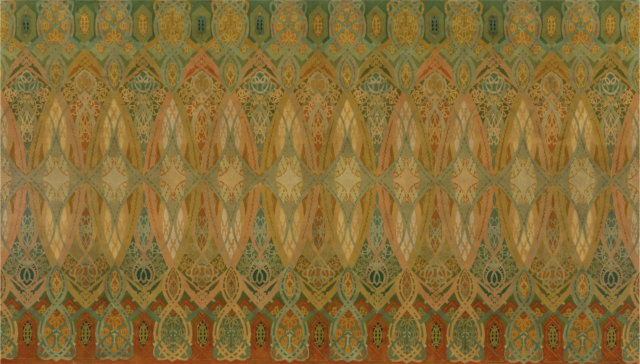
Louis H. Sullivan (American, 1856-1924)
Important Stencil from the Face of the Main Trusses of the Chicago Stock Exchange Trading Room, 1893-1894, Adler & Sullivan
Executed by Healy and Millet, Oil on canvas
57-1/4 x 99-1/4 x 2 inches (145.4 x 252.1 x 5.1 cm)
Provenance: The Art Institute of Chicago; Acquired directly from same
~ The Artist’s Story ~
Louis Sullivan holds a unique position in the history American architecture, not only for his accomplishments as a builder, but also for casting a long shadow of influence over many of the leading proponents of modernism, many through the figure of Frank Lloyd Wright whom he mentored early in his career. Heritage is pleased to present a collection of rare works by Louis Sullivan, one of American’s most important architects, in the upcoming October 13 Design Auction. Continue reading →

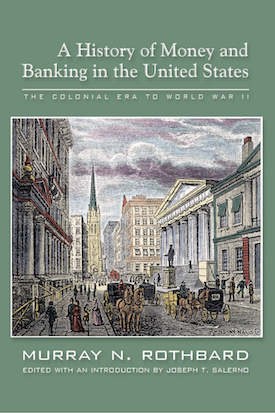 In the beginning…
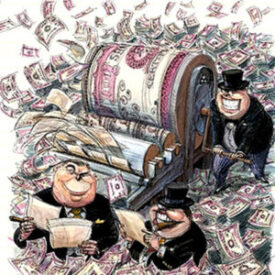 Up until recently I had never given much thought to the subject of economics. I never took an economics class in school and my understanding of the subject could be best explained by, “Don’t spend more than you earn.” However, the more I’ve learned about our system of government, and the men who created it, the more I’ve realized that I’ll never understand the extent of what they did unless I gain some insight into money; how it is created, how it is controlled, and how people profit from its exchange.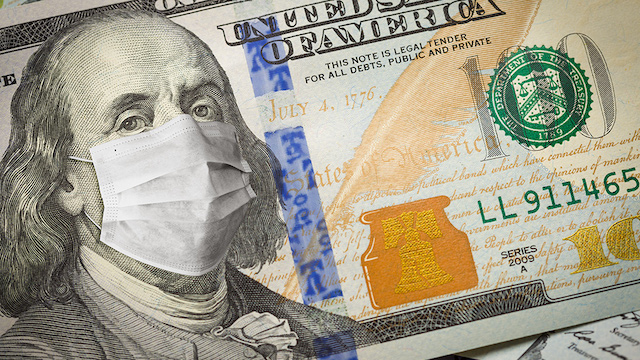
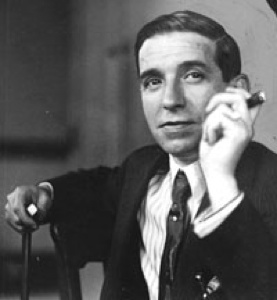 September 11, 2003
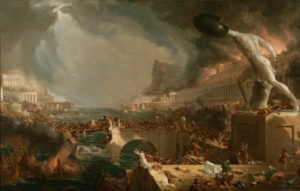 It does not appear that the US has much time before the final unraveling of the economy takes place…
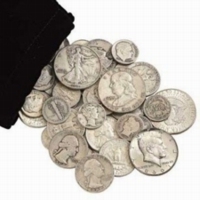 When I was a teenager, a gallon of gasoline was about 25 cents and so was a loaf of bread. Now, each costs around $4. However, there are gas stations today (one is in Medford, Oregon) that will sell you a gallon or more of gas for a mere 25 cents but only if that quarter is a pre-1965 “junk silver” quarter. They call those pre-1965 silver dimes, quarters, and halves “junk silver” because, having been circulated, they are worn and have no real numismatic (coin collecting) value. But they are far from “junk” as each coin is 90% silver, and silver is becoming more and more valuable.