There have been three central banks in our nation’s history. The first two, while deceptive and fraudulent, pale in comparison to the scope and size of the fraud being perpetrated by our current FED. What they all have in common is an insidious practice known as “fractional bankiing.”
The Birth of Legal Counterfeiting
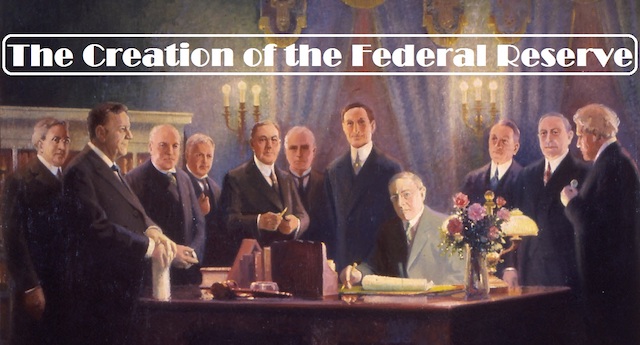
“If I were a rich man, Daidle deedle daidle, Daidle daidle deedle daidle dumb…”
The FED is a central bank. Central banks are supposed to implement a country’s fiscal policies. They monitor commercial banks to ensure that they maintain sufficient assets, like cash, so as to remain solvent and stable.
Central banks also do business, such as currency exchanges and gold transactions, with other central banks.
In theory, a central bank should be good for a country, and they might be if it wasn’t for the fact that they are not owned or controlled by the government of the country they are serving. Private central banks, including our FED, operate not in the interest of the public good but for profit… Continue reading →




 Americans are projected to fall seriously behind on their credit card bills at the highest rate in a decade as banks push a record number of people to get plastic.
 Some people see a “Mad Max” scenario might be coming because of the enormous unpayable global debt. Financial writer and professional trader Rick Ackerman contends, “I am a little more bearish than that. I see a Mad Max scenario as inevitable. . . . I try not to think about it because we’ve all got lives to live and kids to raise. . . .
 What fools we have running the nation. We haven’t had true capitalism in over a hundred years, and what everybody who has bought the flawed concept doesn’t understand is that the supposed “Great Economy” is a pure fabrication and manipulation that cannot and will not last, and it has been so constructed, that when it does implode upon itself, the results will be much more devastating than if the government and the Fed had kept their hands out of it.
 October 28, 1929