Scarcely worth two cents of its once mighty purchasing power the U.S One Dollar bill (once as good as gold) is steeped in history – yet a strange one – with a history of its own…
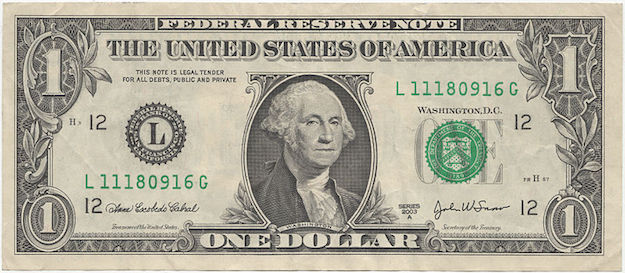 September 27, 2001 ~ Take out a one dollar bill and look at it. The one dollar bill you’re looking at first came off the presses in 1957 in its present design. This so-called paper money is in fact a cotton and linen blend, with red and blue minute silk fibers running through it. It is actually material. We’ve all washed it without it falling apart. A special blend of ink is used, the contents we will never know. It is overprinted with symbols and then it is starched to make it water resistant and pressed to give it that nice crisp look. Continue reading
 As we continue to enjoy the “Yellen gold standard,” now in its Powell phase — who knows how long it will last — let’s look at why the gold standard system worked so well for so many centuries, including nearly two centuries of U.S. history before the rupture in 1971, during which time the United States became the wealthiest country in the history of world.
  The Rothschild’s own most of the central or national banks around the world. This banking cabal prints the currency for their respective nation or in the case of the EuroZone it is printed for a region. The Rothschild’s are able to extract vast sums of wealth from the nations via interest payments on 100% of the currency in circulation. The currency is issued to the nation as a debt instrument that the host nation must pay interest for using. This is the greatest transfer of wealth in human history. In the process the nations all singed away their gold reserves to the Rothschild’s as collateral or some such nonsensical lie.
  The promises cannot be met, and so society decays into warring elites and competing constituencies.
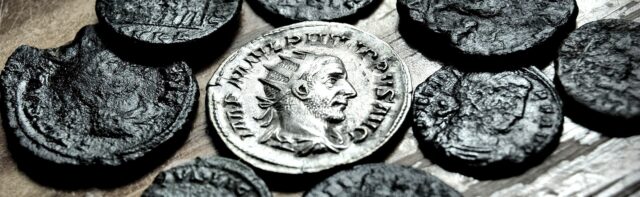 Ancient Rome wasn’t built in a day, the old adage goes. It wasn’t torn down in a day either, but a good measure of its long decline to oblivion was the government’s bad habit of chipping away at the value of its own currency.
 “Although there are countless scourges which in general debilitate kingdoms, principalities, and republics, the four most important (in my judgment) are dissension, [abnormal] mortality, barren soil, and debasement of the currency. The first three are so obvious that nobody is unaware of their existence. But the fourth, which concerns money, is taken into account by few persons and only the most perspicacious. For it undermines states, not by a single attack all at once, but gradually and in a certain covert manner.” – Copernicus,
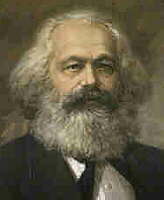 In his “Manifesto of the Communist Party” (1848), published together with Frederick Engels, Karl Marx calls for “measures” — by which he means “despotic inroads on the rights of property” –, which would be “unavoidable as a means of entirely revolutionising the mode of production,” that is, bringing about socialism-communism. Marx’s measure number five reads: “Centralisation of credit in the hands of the state, by means of a national bank with State capital and an exclusive monopoly.” This is a rather perspicacious postulation, especially as at the time when Marx formulated it, precious metals — gold and silver in particular — served as money.
  I wonder if all the newsletter folks…Bix, David “Silver Gorilla” Morgan, Jim “Golden Asshole” Wiley, Lynette Zang and the rest…throw big parties at the end of the year…to count their newsletter money (green paper, fiat money) and have a good laugh at us PM investors and what suckers we are for listening to them. Some of them might compete to see who can come up with the most outrageous prediction that we suckers will believe.