It’s rather difficult to write about poverty and America’s welfare and the dynamics behind it all, since it truly isn’t simply as black and white as so many might wish for everybody to see it.
 Today, here in America, one of the most advanced nations in the world, we find the American people trapped in an age-old recurring pattern of society, struggling through poverty and working while still barely getting by and surviving, in a competition and struggle over assets and resources between the various income levels – between lived suffering and abstract authority – between those who bear the weight of the system and those who most benefit from it. And as the poorest of Americans still working a real fulltime job give first, last and the most in many regards, compassion for their plight descends slowly, thinly, and often too late – suggesting to me that misery is not an accident of society but a precondition quietly accepted by it.
Essentially suggesting that he was being condemned to toil all the days of his life, the Good Lord told Adam in Genesis 3:17 [King James Version]:
“And unto Adam he said, Because thou hast hearkened unto the voice of thy wife, and hast eaten of the tree, of which I commanded thee, saying, Thou shalt not eat of it: cursed is the ground for thy sake, in sorrow shalt thou eat of it all the days of thy life …” ~ J.O.S.
America’s System: Rigged From the Start
Poverty has bedeviled people since the dawn of mankind, and truthfully, it will always be a persistent plague for societies across the world to attempt to relieve and end in some form or fashion, that bests serves all people without coercing help for the less fortunate through legislation by government and force. It is essentially a moral question of when does real need grow into want, opulence, excess and greed, and just how much does any one person really need to live out a full, well-lived life in excess of the seventy years most may expect to see.
The truth of free will and choice tells me without a doubt that every man and woman are free to accumulate just as much as they wish, for any reason of their choosing, doing so by way of their own physical and intellectual abilities. This fact alone will jump out at most people as an immediate indication that many will do quite well while others flail and fall, since we humans are not all endowed with a fine-tuned mind and a high intellect. Equality of ability and intellect simply doesn’t and never will exist within any population, and it cannot be socially engineered to be otherwise, no matter how hard many have tried and will continue to try to do so.
An honest assessment of America’s economic state reveals that never before in the history of our country has the gap between the poor and the wealthy been so incredibly massive, and although many experts will tell us much of this stems from wages falling behind the economic growth and huge profit margins of Corporate America, empirical data reveals time and again that each time wages increase, the price of consumer goods also increases, trapping Americans in a sort of economic Catch-22 and a vicious economic cycle for far too many.
At the age of nine, I found a book in my Great Uncle Art’s library inside his huge home in Levasy, West Virginia, the family Old Home Place that my Grandfather Spurge and his father built from massive sandstone blocks they cut from a quarry themselves. It was a children’s version of ‘Les Miserables’ by Victor Hugo [written in 1862], and Uncle Art gifted it to me after seeing me studiously beginning to read it. It was one of the first books to impact my young, impressionable mind.
In short, ‘Les Miserables‘ is the story of Jean Valjean and his struggle to lead a normal life and redeem himself after serving nineteen years in prison for stealing a loaf of bread to feed his sister’s starving children. He escapes prison by diving from the mast of a docked ship he and other prisoners were refitting, and he later finds a path to redemption and a decent life through the kindness and mercy shown him by a priest, after a policeman arrests him for stealing the priest’s valuable candlesticks. Valjean grows to become a successful businessman and a philanthropist who helps many, after he hides his real identity and assumes the name “Father Madeleine”.
We should note here that Victor Hugo was essentially something akin to an early French socialist with a strong sense of social justice and the principles of freedom for all men or a capitalist with a conscience, who practiced what he preached.
One of the most interesting and poignant observations Hugo would ever make is found in these words, written at a time when the French economy was near collapse:
“Since there is always more misery in the depths than compassion in the heights, everything was given, so to speak, before it was received.”
This quote, drawn from a scene reflecting on the bishop’s charity toward the destitute, encapsulates a grim reality of societal imbalance. The “depths” represent the suffering masses, burdened by unrelenting hardship, while the “heights” symbolize the affluent elite, whose empathy often falls short of the need. Hugo suggests that any aid extended to the poor is not truly a gift but something preemptively claimed by necessity, owed by the very structure of inequality. In essence, the scales are tipped so heavily that benevolence arrives too late, if at all, to alter the fundamental dynamics of power and privation.
You will find no believer in socialism here in my own worldview, since I am a firm believer in working steady and intelligently – and hard too when circumstances demand it of us – nd doing a good day’s work for a good day’s wages. But regardless of what one calls one’s self, this quote by Hugo warrants further inspection and scrutiny, especially in order to better understand our own economic situation here in America, as we fast forward from 1862 in France to 2025 in America.
Hugo’s words resonate eerily with the state of America’s economy today. The United States, the world’s largest economy, boasts unprecedented wealth accumulation at the top while millions grapple with stagnation and insecurity below. Through the prism of contemporary U.S. economic data, policy trends, and social discourse, we find that America’s widening wealth gap mirrors Hugo’s dichotomy: the misery of the lower classes outpaces the compassion of the elite, rendering government aid, corporate philanthropy, and economic “trickle-down” as mere afterthoughts in a system rigged from the start.
There exists a perennial imbalance between suffering and sympathy, between the immediacy of need among the poor and the delayed, often insufficient response of those insulated by wealth or power. When examined through the lens of today’s American economy, Hugo’s insight reveals enduring structural tensions between productivity and reward, risk and security, and sacrifice and recognition.
As of 2025, the U.S. exhibits one of the highest levels of income and wealth inequality among developed nations. The Gini coefficient, a measure of income inequality, hovers around 0.41, far exceeding that of most European countries. More alarmingly, the top 1% of households have amassed nearly 1,000 times more wealth than the bottom 20% over the past 35 years. In the first quarter of 2025, the top 10% owned approximately 70% of total U.S. wealth, leaving the bottom 50% with just 2-3%.
Who in the Hell Can Afford this Crap Anymore?
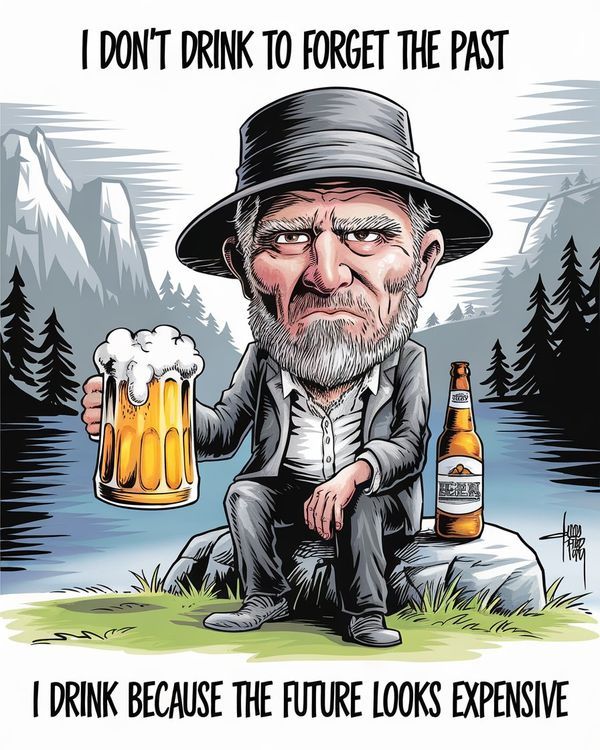
This chasm is not abstract; it translates into daily struggles. Median wages for Black and Latino workers lag behind white counterparts by 24% and 29%, respectively, perpetuating racial economic divides. States like New York and Washington, D.C., exemplify regional extremes, where the top 20% capture over half of all income. The post-pandemic era has exacerbated this, with a “K-shaped” recovery: affluent households rebound via stock market gains and remote work, while lower-income groups face inflation, housing shortages, and job instability. Public sentiment on platforms like X echoes this misery, with users decrying how economic policies solidify a “massive wealth gap,” leaving ordinary people vulnerable to systemic shocks like automation or geopolitical tensions.
In modern America, the “depths” are not limited to the visibly destitute. They include millions of working-class and lower-middle-class citizens who labor continuously yet remain economically vulnerable. Wage stagnation, rising costs of housing, healthcare, education, and energy have created a condition in which full participation in the economy no longer guarantees security. For many, the act of working itself has become an offering made in advance – given without assurance of proportional return.
Hugo’s assertion that misery exceeds compassion reflects a system in which economic pain is normalized. Workers are expected to absorb shocks – recessions, inflation, automation, globalization – while institutions and markets adjust at a glacial pace. Layoffs are described as “necessary,” benefits as “unsustainable,” and pensions as “outdated,” yet the human cost is treated as an unfortunate externality rather than a central moral concern.
This asymmetry is visible in the gig economy, where flexibility is celebrated while instability is internalized by the worker; in healthcare, where illness can lead to bankruptcy despite employment; and in housing, where speculative investment outpaces the basic human need for shelter. In each case, individuals give first – labor, premiums, rent – while protection, relief, or fairness is postponed or denied.
Hugo’s depths are deepened by structural factors. Decades of deregulation, tax cuts for the wealthy (initiated under Reagan and perpetuated through subsequent administrations), and globalization have hollowed out middle-class jobs. Small businesses, traditionally job creators, struggle against corporate monopolies, while minimum wages fail to keep pace with living costs. As one X user noted, this creates “economic feudalism,” where the poor are trapped in cycles of debt and underemployment. The misery is not just financial but psychological – evident in rising mental health crises and social unrest—outstripping any incremental compassion from above.
If the depths overflow with misery, Hugo posits that the heights lack sufficient compassion to balance it. In America, the elite’s response to inequality often takes the form of philanthropy, yet this “compassion” is selective, insufficient, and sometimes self-serving. U.S. charitable giving reached a record $592.5 billion in 2024, driven largely by stock market booms and affluent donors. Affluent Americans (households earning over $200,000) increased their average donations by 30% over the past decade, with 43% volunteering time in 2024. The top 50 donors alone contributed $16.2 billion, often to causes like education and health.
However, this generosity masks deeper issues. Participation rates are declining: only 81% of affluent households donated in 2024, down from 91% in 2015. Philanthropic power is increasingly concentrated, with mega-donors like billionaires wielding influence that rivals governments, raising concerns about democratic erosion. Critics argue this “compassion” is tax-advantaged window dressing: the wealthy deduct billions while lobbying for policies that widen the gap, such as capital gains tax reductions. As inequality.org highlights, the top 1% gained 101 times more wealth than median households in recent decades, far outpacing charitable outflows.
Social media amplifies skepticism. Discussions on X question whether elite-driven initiatives truly address root causes or merely perpetuate dependency. One post laments how “the wealth gap is only going to get worse,” attributing it to oligarchic control rather than genuine empathy. Hugo’s heights are exemplified by figures like Elon Musk or Jeff Bezos, whose philanthropy (e.g., space exploration funds) often aligns with personal ambitions, while their companies face accusations of worker exploitation. This imbalance – vast profits upstairs, meager wages downstairs – ensures compassion remains a trickle, not a torrent.
Hugo’s “heights” symbolize not merely wealth, but distance – economic, cultural, and moral. In today’s American economy, decision-making power is often concentrated far from the consequences of those decisions. Corporate boards, financial institutions, and policymakers operate within abstractions: quarterly earnings, efficiency metrics, growth projections. Human hardship becomes data, not experience.
This distance dulls compassion. It is not necessarily cruelty, but insulation. When one’s material needs are met and risks are diversified, economic pain becomes theoretical. Thus, compassion – when it arrives – often takes the form of after-the-fact remedies: charitable donations, temporary stimulus, tax credits, or symbolic gestures. These measures may alleviate symptoms, but they rarely challenge the underlying structures that produced the misery in the first place.
Hugo’s line suggests that compassion is reactive, while suffering is proactive. The poor must act – to work, to endure, to adapt – before help is even considered. In America, this is evident in means-tested welfare systems that require proof of desperation, in bankruptcy laws that punish failure more harshly than speculation, and in social narratives that equate poverty with personal deficiency rather than systemic imbalance.
When read against the backdrop of the modern American economy, Hugo’s insight feels less like a quotation and more like a mirror. The United States, wealthy beyond historical comparison, has nonetheless normalized a condition in which vast numbers of its citizens live one misfortune away from ruin. Beneath the glow of stock tickers, technological marvels, and GDP charts lies a quieter ledger, written in unpaid overtime, chronic stress, deferred medical care, and dreams narrowed by necessity. Here, too, everything is given before it is received, if it is received at all.
In the American economy, labor frequently bears disproportionate risk. Workers train for jobs that may disappear, contribute to retirement systems that may erode, and pay into social structures whose benefits they may never fully enjoy. Meanwhile, returns on capital — stocks, real estate, intellectual property – are often insulated from loss through policy, bailouts, or regulatory preference.
This dynamic reveals that the foundational contributions of the many are quietly assumed, while the rewards accrue upward. The economy functions because countless individuals give stability, productivity, and compliance before receiving wages that barely keep pace with inflation, benefits that shrink, or respect that erodes.
The culminating insight – that aid is “given before it is received” – implies preemptive entitlement born of injustice. In America’s economy, this plays out through welfare programs, stimulus checks, and progressive taxation, which are framed as benevolent gifts but are, in reality, minimal reparations for systemic extraction. Government interventions like the Earned Income Tax Credit or pandemic relief provided lifelines, yet they pale against corporate bailouts and tax loopholes that favor the rich. The 2025 Census data reveals ongoing income disparities, with top earners seeing 8% wage growth in states like New York amid broader stagnation.
Hugo’s “depths” are not simply places of want; they are places of endurance. Those who dwell there contribute invisibly yet indispensably. The American economy is powered by workers whose labor rarely appears in celebratory narratives of success: warehouse pickers, home health aides, truck drivers, retail clerks, caregivers. They give their bodies, their time, and often their youth to systems that promise advancement but deliver precarity. Productivity rises, profits swell, and markets applaud themselves, while wages lag behind the cost of living. Value flows upward; strain settles downward. The depths grow heavier, not because nothing is given, but because so much already has been.
Compassion, in Hugo’s formulation, lives in the height – not necessarily because the wealthy are cruel, but because they are distant. Distance breeds abstraction. Economic suffering becomes a statistic, a talking point, a policy problem to be managed rather than a moral reality to be confronted. In America, this distance is reinforced by layers of insulation: gated communities, financial instruments, legal protections, and political influence. From such heights, misery can be debated endlessly without ever being fully felt. Compassion thus becomes procedural rather than personal, delayed until studies are conducted, budgets negotiated, and narratives approved.
This dynamic fosters a sense that the poor “take” what is owed, not receive what is given. Trickle-down economics, promising prosperity from the heights, has instead concentrated wealth upward, as evidenced by the U.S. outpacing global peers in inequality. Public frustration boils over in online forums, where users decry how policies “keep us right in the economic situation we are in,” with the top 1% hoarding gains from innovations like AI or cryptocurrency. Hugo would recognize this as the poor’s misery demanding restitution, not charity.
Debt offers one of the clearest modern expressions of Hugo’s warning. In the United States, participation in ordinary life often requires borrowing against the future. Education demands loans before opportunity materializes. Healthcare demands payment before healing is complete. Housing demands decades of obligation before stability is secure. In each case, individuals give first – years of future labor pledged in advance – on the promise that dignity and security will follow. For many, they do not. Instead, debt becomes a quiet companion, shaping choices, narrowing horizons, and deepening anxiety. Misery accumulates privately, while compassion is offered publicly only in fragments.
Nowhere is this imbalance more evident than in the treatment of work itself. American culture venerates labor rhetorically while devaluing it economically. The language of grit, hustle, and self-reliance obscures the fact that millions labor faithfully and still fall behind. When hardship is framed as personal failure, compassion becomes conditional, even suspect. Assistance is rationed through proof of desperation, forcing people to demonstrate their misery before relief is granted. By the time help arrives, the cost has already been paid in dignity, health, and hope. Hugo would recognize this not as generosity, but as moral delay.
The American social safety net – our massive Nanny Statevthough often defended as evidence of national compassion, bears the marks of this same hesitation. Aid is frequently complex, stigmatized, and slow. Eligibility thresholds create cliffs where a single dollar earned can mean benefits lost. Applicants wait months or years while their lives unravel in real time. The system assumes that suffering must be verified before it can be relieved, ignoring Hugo’s central truth: suffering itself is evidence of prior contribution. The poor do not arrive empty-handed; they arrive having already given more than was asked.
The suffering for far too many Americans is immediate, while compassion is often delayed; contribution precedes reward; and the health of a society depends on how it reconciles that imbalance. In today’s American economy, Hugo’s words serve as a mirror, reflecting the lived experience of millions who give far more than they receive, not because they lack virtue but because the system depends upon their endurance.
If nothing else, America’s corporations must properly compensate the nation’s workers by increasing their share of the profits, after all operating costs and reinvestment into the companies have been paid, especially in light of the fact that too often we find CEOs receiving multimillion dollar bonuses even while driving companies into the ground. Without sound equitable solutions of one for or another, the wealth gap will simply continue to expand exponentially and create a dangerous, untenable situation far into our nation’s foreseeable future.
Economic inequality magnifies these dynamics until they become structural. The concentration of wealth at the top of American society has produced a landscape where shocks are unevenly absorbed. Inflation, recession, and crisis strike downward with disproportionate force. Those in the depths lose jobs first, recover last, and bear the longest scars. Those in the heights, buffered by assets and access, often emerge strengthened. This is not merely an economic outcome; it is a moral one. Loss is socialized below, while recovery is privatized above. Everything is given, yet little is returned.
One must also challenge America’s cherished mythology of merit. While effort matters, it does not operate in a vacuum. The notion that success is solely earned allows compassion to be withheld without guilt. It permits society to overlook the fact that many who struggle have worked harder, longer, and under harsher conditions than those who prosper. The single parent juggling shifts, the laborer with a worn-out body, the veteran navigating underfunded systems, all testify to the fact that their misery is not proof of failure, but of sacrifice rendered invisible.
America occasionally gestures toward correcting this imbalance through labor movements, social reforms, and moments of collective reckoning. Yet such gestures are often fragile, temporary, or fiercely contested. Compassion, it seems, must struggle uphill, while misery slides effortlessly downward. More than hypocrisy, we must see the warning in all of this: no society can indefinitely demand sacrifice from its depths while offering abstraction from its heights.
An economy that forgets who gives first will eventually lose the consent of those who hold it up. Compassion cannot remain perched in the heights, arriving late and sparingly. If it does, misery will continue to do what it always has – accumulate, deepen, and demand its due.
In the end, Victor Hugo’s sentence asks a simple but devastating question of the American economy: who gives, and who receives – and in what order? An economy is not merely a machine for producing wealth; it is a story a nation tells itself about what it values. If those at the bottom must always give first, give most, and wait longest, then prosperity itself rests on borrowed moral ground.
To heed Hugo is to recognize that compassion delayed is not compassion denied – it is justice postponed. And justice, postponed too long, has a way of returning not as reform, but as reckoning.
Until Then…
December 22, 2025
Justin O. Smith ~ Author
~ the Author ~
Justin O. Smith Has Lived in Tennessee Off and on Most of His Adult Life, and Graduated From Middle Tennessee State University in 1980, With a B.S. And a Double Major in International Relations and Cultural Geography – Minors in Military Science and English, for What Its Worth. His Real Education Started From That Point on. Smith Is a Frequent Contributor to the Family of Kettle Moraine Publications.