This is an explanation of the difference between capitalism and collectivism that is honed more towards the average American who probably isn’t interested in specific case comparisons, charts and graphs and all the political minutiae and complexities that are so often presented within academic-style white papers. It’s for people who tend to look at life more simplistically and along the line that something is either right or it’s wrong.
What is collectivism, stripped of its poetic veneer? It is the belief that the state knows best. That the individual is a cog, not a soul. That freedom is negotiable, but government power is sacred. It is the soft tyranny of “we know better,” the velvet‑gloved fist that promises equality but delivers mediocrity.
And what is statism? It is the conviction that every problem – from the price of milk to the weather – requires a government solution. It is the expansion of authority into every corner of life, until the citizen becomes a spectator in their own story.
But the American spirit – the real one, not the sanitized version – was never built on dependence. It was built on the stubborn belief that individuals, not institutions, are the engines of progress. That freedom, not control, is the soil in which prosperity grows. That responsibility, not reliance, is the mark of a mature society.
So when the fraud scandals erupt, when the waste is exposed, when the debt climbs like a vine choking the tree – these are not isolated incidents. They are symptoms of a deeper ailment: a government that has grown too large, too distant, too insulated from the consequences of its own actions.
And the cure is not more of the same. It is not another layer of bureaucracy, another committee, another program. The cure is a return to the principles that once made this nation a beacon: limited government, personal responsibility, fiscal restraint, and the freedom for individuals to rise or fall by their own efforts. ~ J.O.S.
Rugged Individualism and Capitalism Built America
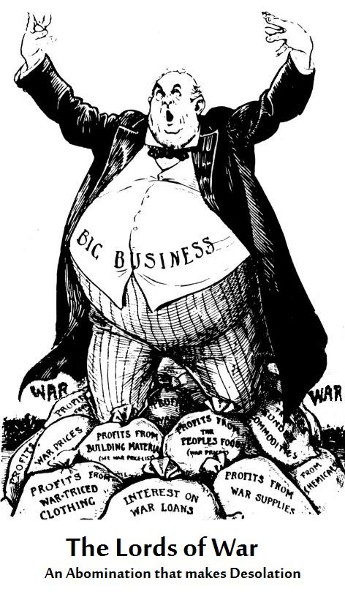 I have lived long enough, and watched closely enough, to learn that civilizations do not usually collapse in a single thunderclap. They erode. They soften. They trade responsibility for reassurance and call it progress. And by the time the fire goes out, most folks are too comfortable – or too confused – to remember how it was first lit.
I once watched a man freeze not because winter was cruel, but because he trusted another man’s fire. He had crossed the pass light, confident that hospitality would carry him through. When the storm came and the cabins shut their doors, confidence turned brittle. The lesson was not about cold – it was about dependence.
Nations, I have learned, perish the same way.
Out on the frontier, you learned early that fire mattered. You cut the wood yourself. You guarded the flame. You knew that borrowed fire never lasted the night. A man who relied on another to keep him warm – much as modern day collectivists in America are wont to do – learned quickly how thin promises could be when the wind came up. That lesson, it seems to me, has been forgotten by a nation that once prided itself on standing upright and paying its own way.
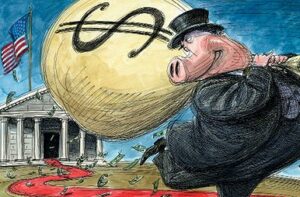
Today the warning signs are everywhere, blinking like lanterns hung too close together. Government agencies confess – without shame – to losing or misplacing sums of money so vast they numb the mind. Billions slip through the fingers of the tax collector. Trillions pass through the hands of the defense establishment without any clear accounting. Enough waste, they say, to buy every American a good used car – and yet no one seems embarrassed, much less accountable.
In a small camp, that sort of carelessness would get a man turned out into the cold. In a great bureaucracy, it earns him a promotion.
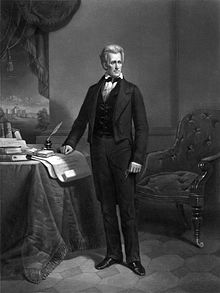 Andrew Jackson, for all his faults, understood one hard truth learned in the wilderness: debt makes a people weak. When he killed the Second Bank of the United States and paid down the national debt, it was not elegance that drove him – it was survival instinct. He had seen what happens when financial power concentrates beyond accountability. He knew that paper wealth could vanish faster than a river crossing in spring thaw.
Today, we have forgotten that lesson. We print what we once earned. We borrow what we once saved. And when the numbers no longer make sense, we accuse arithmetic of cruelty.
We are told, endlessly and confidently, that the trouble lies elsewhere. That capitalism has grown cruel. That markets have turned against the people. That private ownership, ambition, and profit are the villains of the age. It is a tidy story, and a convenient one, because it points the finger outward – away from the true source of the rot.
I have seen the figures now admitted openly: billions lost by the tax collector, trillions unaccounted for by the defense establishment. In any frontier town, a man who could not explain where the money went would be run out before sundown. In modern government, he testifies before a committee and goes right back to work.
They tell us this waste is unfortunate but unavoidable. That scale requires sacrifice. Yet history shows the opposite. The larger the system grows, the less careful it becomes. The Roman Republic began to rot not when it lacked resources, but when it believed itself immune to consequence. Bread and circuses replaced citizenship. Debt replaced discipline. And the legions that once defended the republic became tools of political ambition.
When governments learn they can spend without restraint, fraud ceases to be an accident. It becomes the cost of doing business.
But a man who has worked for his pay knows better. When prices rise and wages lag behind, when savings shrink and effort buys less than it once did, the cause is not greed suddenly blooming in every shopkeeper’s heart. It is inflation. And inflation does not come from markets behaving badly; it comes from governments behaving recklessly.
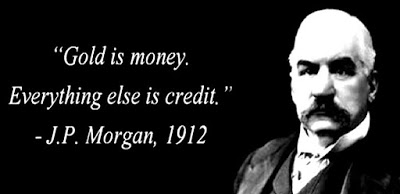 Money, like trust, is only as good as the restraint behind it. When a government prints currency faster than its people produce value, the result is not prosperity but dilution. Each new dollar steals quietly from the ones already earned. The loaf costs more, the rent climbs higher, and the worker is told – insultingly – that this is simply the cost of progress.
Every trillion-dollar spending bill is sold as an emergency, a necessity, a moral imperative. Yet emergencies have a way of becoming habits, and habits become systems. The debt piles up like snow against a cabin door, each storm ignored because the last one didn’t quite bury the place. Meanwhile, the interest alone becomes a permanent claim on the future – on children not yet born, who will inherit obligations they never consented to.
This is not generosity. It is indulgence masquerading as virtue.
I remember reading accounts of the Homestead Act – how men were given land not to be managed for them, but to be worked by them. Many failed. Some froze out. Some starved. But those who endured did so because ownership sharpened responsibility. The land did not forgive laziness. Neither did the weather. That harsh honesty built a people who understood cause and effect.
Contrast that with systems that promise provision without ownership. In the Soviet Union, collective farms were supposed to outperform private ones through shared effort. Instead, productivity collapsed. Even Lenin admitted – quietly – that peasants worked hardest on the small private plots they were allowed to keep. When responsibility is diluted, effort follows it into the ground.
Venezuela offers the same lesson in modern dress. I remember when Caracas was spoken of as a city of oil wealth and ambition. The state took control in the name of the people, fixed prices, expanded subsidies, and printed money to cover the gaps. At first, there was applause. Then there were shortages. Then there were lines. Then there was hunger. Inflation erased savings so thoroughly that people weighed cash instead of counting it. Collectivism did not fail because it was sabotaged – it failed because it ignored reality.
The defenders of these ideas insist those examples do not count – that the failure was in the execution, not the theory. But a man who has seen the same bridge collapse again and again grows skeptical of the blueprints.
In America today, from Los Angeles to New York City to Seattle and every Democrat Party stronghold, the same instincts wear better clothes and speak a gentler language. There are no firing squads, no slogans painted on walls. Instead, there are regulations that multiply quietly, agencies that grow without limit, and a bureaucracy that no one can quite name, yet everyone must obey. Freedom is not seized in one blow; it is buried under forms, permits, and conditional permissions.
And yet, here at home, we are told that rugged individualism is the problem. That self-reliance is outdated. That we must trade it for managed care and centralized compassion.
I have known mining camps, in Cripple Creek, Central City and Golden [Colorado] in my youth, where men pooled resources voluntarily – where a sick man was fed, where a widow was protected. Those arrangements worked because they were chosen. When charity is compelled, it ceases to be charity. When cooperation is enforced, it becomes control.
The tragedy is not only economic, but moral. When people are told the state will provide, they are slowly relieved of responsibility – for themselves, for their neighbors, for their communities. Charity becomes compulsory. Cooperation becomes coerced. Dignity erodes as dependency grows.
Capitalism, for all its rough edges, has one virtue that government systems lack: it must answer to reality. A business that wastes resources fails. A product that does not serve a need disappears. Markets punish dishonesty and reward value, not perfectly, but persistently. Government, by contrast, can fail indefinitely. Its losses are socialized, its mistakes excused, its power expanded in response to its own incompetence.
 Inflation has become the invisible tax of this arrangement. I well-remember the 1970s, when wages rose on paper but life grew poorer by the month. The old men of that time did not blame shopkeepers. They blamed Washington and the printing press. They understood that when money is debased, it is the saver and the worker who pay first.
Today, the same pattern repeats, only on a grander scale. Trillion-dollar bills are passed with the casual air of bar tabs. The debt clock spins like a slot machine that never pays out. And when the cost-of-living climbs, the finger is pointed at markets – never at the hands that flooded them with cheap currency.
This is why fraud is not an anomaly in large government systems – it is inevitable. When no one owns the money, no one protects it. When accountability is diffused across layers of authority, responsibility vanishes altogether. The system feeds on productivity, consumes it, and returns for more without ever asking whether it earned the right, much as we are currently witnessing in Minneapolis today, where thousands of newly arrived Somalians and Somalian-Americans have been discovered to have run a decade-long daycare and food-drive fraud that netted them billions in stolen U.S. tax-dollars.
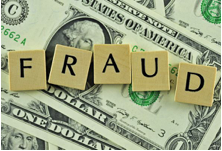 Fraud thrives in this environment. The Pentagon cannot pass an audit not because the task is too hard, but because no one is punished for failing. The IRS sends out improper refunds because volume matters more than accuracy. In the gold camps, a man who miscounted the take was suspected of theft. Today, miscounting is institutionalized, and so too is outright theft when it benefits politicians, like those in Minnesota – Governor Tim Waltz, AG Keith Ellison and others who turned a blind-eye to the mountain of criminal fraud occurring before their very eyes, as conservative law-abiding Americans demand prosecutions and convictions, some real justice for a change.
Capitalism is blamed because it cannot defend itself in a hearing room. Yet it was capitalism that built the railroads, electrified towns, and lifted millions out of poverty – not because it was kind, but because it was accountable. Failure meant loss. Success meant survival.
Rugged individualism, so often mocked today, was never about cruelty. It was about responsibility. It was about knowing that if you wanted warmth, you cut wood. If you wanted food, you worked. If your neighbor fell, you helped – not because you were ordered to, but because it was right. Communities built on voluntary action are stronger than those managed by decree.
Rugged individualism built this country not because it was romantic, but because it was necessary. When survival depends on effort, virtue follows practicality. People plan. They save. They help each other because they must – and because they choose to.
The fire that built this country was lit by men and women who understood limits, effort, and consequence. It burned bright because it was earned. The fire offered by modern statism is borrowed – fueled by debt, sustained by illusion, and destined to go out when reality finally asserts itself.
 The danger is not the free market, nor the individual striving to better his lot. The danger is a system that grows by weakening the very people it claims to serve.
The collectivist alternative offers comfort without consequence. It promises warmth without wood, food without fields, money without work. For a time, the illusion holds. Then winter arrives.
I have seen winters come early.
So, I say this not as a defender of freedom and individual liberty, and as a student of history and hardship: beware the borrowed fire. Beware the system that grows by weakening those it claims to protect. Beware the voice that calls independence cruelty and dependence compassion.
The ledger always balances in the end. And when it does, it will not be the architects of debt who pay first – it will be the ordinary men and women who trusted the flame to last the night.
Winter does not negotiate.
And neither does reality!
January 12, 2026
Justin O. Smith – author
~ the Author ~
Justin O. Smith Has Lived in Tennessee Off and on Most of His Adult Life, and Graduated From Middle Tennessee State University in 1980, With a B.S. And a Double Major in International Relations and Cultural Geography – Minors in Military Science and English, for What Its Worth. His Real Education Started From That Point on. Smith Is a Frequent Contributor to the Family of Kettle Moraine Publications.