Why Gold is Money

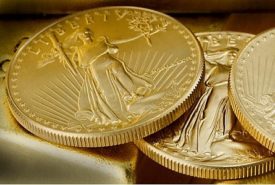
It’s an unfortunate historical anomaly that people think about the paper in their wallets as money. The dollar is, technically, a currency. A currency is a government substitute for money. But gold is money.

Now, why do I say that?
Historically, many things have been used as money. Cattle have been used as money in many societies, including Roman society. That’s where we get the word “pecuniary” from: the Latin word for a single head of cattle is pecus. Salt has been used as money, also in ancient Rome, and that’s where the word “salary” comes from; the Latin for salt is sal (or salis). The North American Indians used seashells. So, money is simply a medium of exchange and a store of value. Continue reading →

Posted in Let's Get Physical, The Mine or the Shaft | Comments Off on Why Gold is Money

Herbert Hoover: Godfather of the New Deal

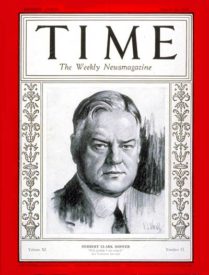
herbert-hooverHerbert Hoover was worth $4 million in 1914 as a mining engineer and mine owner. This was before World War I, when the dollar bought 25 times more than it does today. He was good at what he did in the private sector.

He gained national fame as a World War I relief administrator: Belgian relief. The Germans let him do this because it freed up food for the German Army: no need to feed occupied Belgium. This is now how the history books tell it. This was the next phase of the legend of “Hoover the Engineer.”

Harding appointed him Secretary of Commerce. Hoover then oversaw the nationalization of the airwaves. He created the Federal Radio Commission, which became the Federal Communications Commission. Continue reading →

Posted in The History of it All | Comments Off on Herbert Hoover: Godfather of the New Deal

We are busted…

78-15

Posted in The History of it All | Comments Off on We are busted…

The Gold Standard: Ten Things Every Economist Should Know

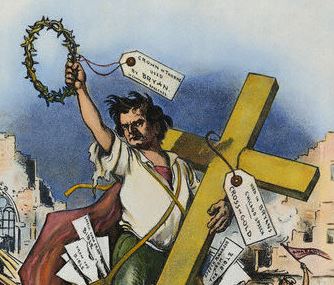
Democratic and populist leader William Jennings Bryan, climaxed his career when when he gave his famous "Cross of Gold" speech which won him the nomination at the age of 36.

Democratic and populist leader William Jennings Bryan, climaxed his career when when he gave his famous “Cross of Gold” speech which won him the nomination at the age of 36.

At the risk of sounding like a broken record (well, OK–at the risk of continuing to sound like a broken record), I’d like to say a bit more about economists’ tendency to get their monetary history wrong. In particular, I’d like to take aim at common myths about the gold standard.

If there’s one monetary history topic that tends to get handled especially sloppily by monetary economists, not to mention other sorts, this is it. Sure, the gold standard was hardly perfect, and gold bugs themselves sometimes make silly claims about their favorite former monetary standard. But these things don’t excuse the errors many economists commit in their eagerness to find fault with that “barbarous relic.” Continue reading →

Posted in Viewpoint | Comments Off on The Gold Standard: Ten Things Every Economist Should Know

Hidden History: The Wall Street Coup Attempt of 1933

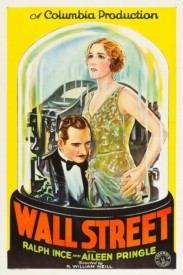
Wall-Street-Columbia-1929_02I wonder why this is never mentioned in history classes in the US.

And I wonder why the US media has not frankly discussed what happened. Is it because it would embarrass powerful figures still on the scene today?

I wonder why there is no frank discussion of the Wall Street interests who helped to finance the fascists in Europe, including the National Socialists in Germany, even during the 1940’s?

When the going gets tough, the moneyed interests seem to invariably reach for fascism to maintain the status quo. Continue reading →

Posted in The History of it All | Comments Off on Hidden History: The Wall Street Coup Attempt of 1933

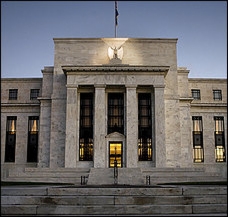
Federal Reserve 100 Years of Failure

In ‘honor’ of all of the disciples of Paul Warburg and his handlers, the Rothschild Dynasty – Happy Birthday you traitorous bas-TURDS. (Ed.)

fed_rsrvResearching economic publications on the first century of the Federal Reserve System provides a wealth of financial information that attempts to explain the way the central bank works. Rarely will the academic studies and official reports address the raw nature of a money creation by a private banking monopoly. The common practice of disparaging sources outside government or corporatist business circles, attempts to avoid addressing, much less confronting the plutocracy that controls the debt created money system.

One such source list of the ownership of the Federal Reserve, compiled by Thomas D. Schauf appears on The Federal Reserve Scam! However, before getting to the particulars of the actual families behind the central banking cabal, it is important to go directly to the source of the primary chronicler who investigated and exposed the scheme. The late, Eustace Mullins – Secrets of The Federal Reserve, video reveals the entire sordid background.

Now review 25 Fast Facts About The Federal Reserve You Need To Know, from ETF Daily News that advises investors. The way these items play into the central banking model practiced by all 187 nations that belong to the IMF, demonstrates that banksters of the most select rank, are behind continued debt bubbles that are strangling the world. Continue reading →

Posted in Viewpoint | Comments Off on Federal Reserve 100 Years of Failure

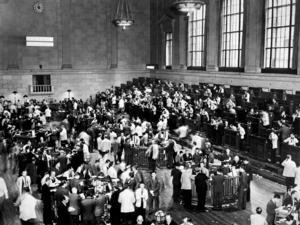
New York Panics! Eerie Photos Of The Stock Market Crash Of 1929

After the Roaring Twenties, a decade of partying, lavish living and social and cultural change, Americans thought the rising stock market and good times would last forever.

On Sept. 3, 1929 the stock market hit an all-time high, with the Dow Jones Industrial Average peaking at 381.17

But Oct. 24, 1929 — what became known as “Black Thursday” — the healthy bull market was shaken, and stock prices plummeted. The market lost 11 percent of its value. Investors tried to step in by putting money into the market, but it was no use. Continue reading →

Posted in The History of it All | Comments Off on New York Panics! Eerie Photos Of The Stock Market Crash Of 1929

Keeping the Poor Poor (Until They’re Not)

depressionGovernment data indicate that the U.S. remains far from winning the longest war in its history: the war on poverty.

The latest line of argument from defenders of the welfare system is that we are measuring poverty inaccurately; counting welfare as income, they suggest, would show that we are winning the war on poverty. Proponents of changing the way we classify the data on America’s poor would accomplish little more than a subterfuge to distract from glaring flaws with the status quo of government social welfare programs.

The economic downturn that began in 2007 has officially been over since June of 2009, but the end of the recession did not mark the beginning of meaningful prosperity for many Americans. With the coming of the debt ceiling and proposed reforms to the government’s food stamp program, there is a serious debate unfolding about what the government should do to bring people out of poverty. Continue reading →

Posted in Viewpoint | Comments Off on Keeping the Poor Poor (Until They’re Not)

The World Gold Standard of 1870-1914: the Most Perfect Monetary System Ever …

The most perfect monetary system humans have yet created was the world gold standard system of the late 19th century, roughly 1870-1914. We don’t have to hypothesize too much about what a new world gold standard system could look like. We can just look at what has already been done.

Contrary to popular belief, people generally did not conduct commerce with gold coins. Yes, gold coins existed, but people mostly used paper banknotes and bank transfers, just as they do today. In 1910, gold coins comprised $591 million out of total currency (base money) of $3,149 million in the United States, or 18.7%. These gold coins were probably not used actively, and served more as a savings device, in a coffee can for example. Continue reading →

Posted in Let's Get Physical | Comments Off on The World Gold Standard of 1870-1914: the Most Perfect Monetary System Ever …

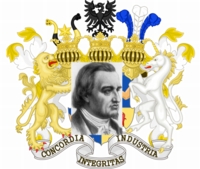
How The Rothschilds Created Modern Finance And A Vast Fortune That Has Lasted For Centuries

Rothschild: Things never change

The Rothschild dynasty is, without a doubt, the pioneer of international finance.

Mayer Amschel Rothschild, the first of the family to open a bank, was honored by Forbes as the seventh most influential businessman of all time and the inventor of modern banking who introduced “concepts such as diversification, rapid communication, confidentiality and high volume.”

Simply, Mayer understood and was willing to spend money in order to make money.
But the family’s rapid rise to wealth has earned them much animosity throughout the annals of history. A quick Google of ‘Rothschild family’ reveals a vast number of conspiracy theories surrounding the allegedly unsavory means used to attain their fortune, the breadth of their connections, and their influence over major world events.

To be fair, many elements of the family’s history are unsettling enough to pique mass interest. For instance, Mayer’s primary manner of hoarding the dynasty’s wealth was to institute a policy of keeping friends close…and family even closer.

But, as William Langley notes, one question looms large:
How did a down-on-its-luck brood of German street traders emerge, seemingly overnight, to become the prime facilitators of modern capitalism, the wielders of immense political power and, as the historian Niall Ferguson puts it in The House of Rothschild, “the richest family in all of history”?

Written by Lucas Kawa, and published at the Business Insider, December 23, 2012.

FAIR USE NOTICE: This site contains copyrighted material the use of which has not always been specifically authorized by the copyright owner. We are making such material available in our efforts to advance understanding of environmental, political, human rights, economic, democracy, scientific, and social justice issues, etc. We believe this constitutes a ‘fair use’ of any such copyrighted material as provided for in section 107 of the US Copyright Law. In accordance with Title 17 U. S. C. Section 107, the material on this site is distributed without profit to those who have expressed a prior interest in receiving the included information for research and educational purposes. For more information go to: http://www.law.cornell.edu/uscode/17/107.shtml
Posted in The History of it All | Comments Off on How The Rothschilds Created Modern Finance And A Vast Fortune That Has Lasted For Centuries