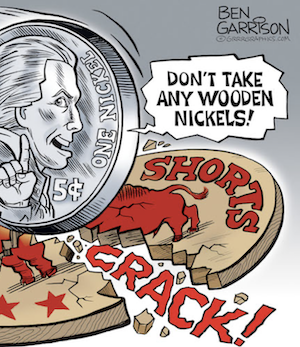
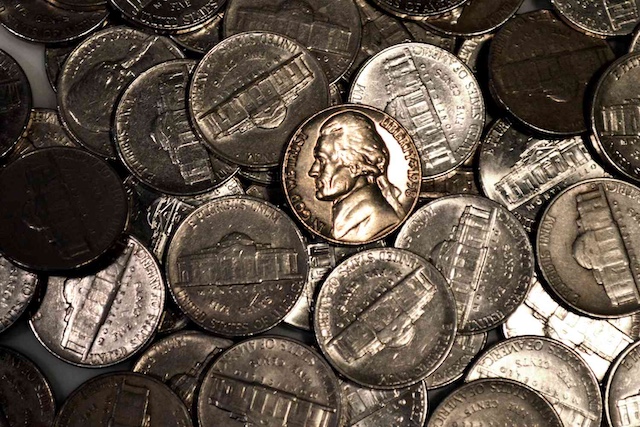
 Finance commentator Adam Snyder, speaking on his Snyder Reports channel, says Americans may need to get used to another small but symbolic change in everyday life: after the penny’s phaseout, the nickel could now be next on the chopping block.
In Snyder’s telling, this is not just a quirky coin story. It is tied to rising metal costs, supply chain stress, war-linked commodity pressure, and a broader push away from physical cash. He argues that if production costs keep moving in the wrong direction, the government may decide the nickel is no longer worth keeping around.
That may sound minor at first. It is only five cents, after all. But as Snyder framed it, this kind of shift says a lot about where the economy is heading and what happens when the cost of making money starts exceeding the money itself.
Why Snyder Thinks The Nickel Is In Trouble
Adam Snyder began with the basic math. The penny, he said, was already eliminated after the government decided it simply cost too much to make. According to him, that decision was announced back in February 2025, and the penny was effectively phased out the following fall.
Now, he says, the nickel may be following the same path.
Snyder explained that the nickel, despite being worth only five cents, already cost about 14 cents to produce and distribute as of last year. And in his view, that old number is likely no longer even accurate, because the raw materials behind the coin have gotten more expensive.
He pointed to copper in particular, noting that the modern nickel is made mostly of copper, with a smaller share of nickel metal mixed in. In his telling, rising copper prices are a major reason the nickel is becoming harder to justify.
That is a striking problem on its face. A government can tolerate some inefficiency, but once a coin costs nearly three times its face value to produce, it stops looking like a useful piece of currency and starts looking like a built-in loss.
Rising Metal Costs Are Changing The Equation
Snyder said copper prices have moved sharply higher, and he treated that as a key warning sign. He argued that when the United States first started talking about eliminating the penny, copper was already expensive, but the pressure has only intensified since then.
In his telling, copper has climbed enough that the cost of producing the nickel is almost certainly now higher than the already-bad 14-cent estimate. Once you add manufacturing and distribution costs on top of that, he said, the true price could easily rise to 15 or even 16 cents per nickel.
That kind of math is hard to defend politically, especially at a time when Washington is under pressure to show savings anywhere it can.
Snyder’s point here is fairly practical. The government is not likely to keep minting a coin indefinitely if each one represents a bigger loss than the last. If the materials remain expensive and the supply chain stays tight, the nickel becomes an easy target.
And once the penny is already gone, the leap to cutting the nickel feels much smaller.
The Iran War And The Supply Chain Angle
Where Snyder took the argument further was by tying the nickel’s future to global supply disruptions, especially those linked to the war involving Iran and the instability around the Strait of Hormuz.
He said the conflict is affecting more than just oil. It is also helping drive problems in sulfur-related supply chains, and that matters because sulfuric acid plays a major role in producing copper and nickel.
Snyder read from material explaining that sulfur is a critical input for certain kinds of copper mining and for nickel production. But he stressed that sulfur is also heavily used in fertilizer, which governments are far more likely to prioritize because food production depends on it.
That was one of the more interesting parts of his analysis. In Snyder’s view, this is not simply a metal-pricing problem. It is a resource competition problem.
If sulfur has to be steered toward fertilizer in order to support agriculture, then less of it may be available for industrial metal production. That can tighten supply, raise prices, and make the inputs behind everyday products, including coins, even more costly.
It is one of those knock-on effects that sounds obscure until you think it through. A war disrupts shipping, which pressures industrial supply, which raises production costs, which then changes something as ordinary as the coins in your pocket.
Why Snyder Thinks Cash Purchases May Change
Snyder also focused on what the disappearance of the nickel would mean at the register.
Right now, with the penny already gone, cash transactions are typically rounded to the nearest nickel. If the nickel disappears too, Snyder said, cash purchases would likely be rounded to the nearest dime instead.
That may not sound like a huge difference, but it would mark another step away from exact small-denomination cash pricing. Card users would likely still be charged to the cent digitally, while people paying in physical cash would deal with more rounding.
That is why Snyder tied this coin story to something bigger: the long-running concern that the economy keeps moving closer to a fully digital payment system.
He brought up the fear that once physical coins keep disappearing, it becomes easier to push consumers toward cards, apps, and possibly one day a central bank digital currency. Snyder did not say that switch was guaranteed, but he clearly treated it as a direction worth watching.
This is where his commentary becomes more speculative, but it is also where many viewers probably feel the underlying discomfort. Coins are not just metal discs. They are part of how people understand private, simple, person-to-person transactions. The fewer physical options that remain, the more digital systems take over by default.
Snyder Says The Government Has A Cost Problem
Another part of Snyder’s argument was that the United States government has been talking for months about getting rid of the nickel simply because it no longer makes financial sense.
His view is blunt: if a coin loses the government money every time it is manufactured and distributed, why keep doing it?
That question gets harder to answer when energy costs are rising too. Snyder noted that higher energy prices make it more expensive not just to source materials, but to mint and move coins around the country.
So even if metal prices alone were not enough to sink the nickel, energy could push the cost structure further into the red.
This is probably the most straightforward part of the story. Governments can keep traditions alive for a while, but once those traditions become expensive enough, cost usually wins.
And the nickel does not have much sentimental protection compared with larger bills or more useful coins. It is small, widely ignored, and increasingly awkward in an economy where many prices are already rounding psychologically upward anyway.
What Snyder Says People Should Watch Now
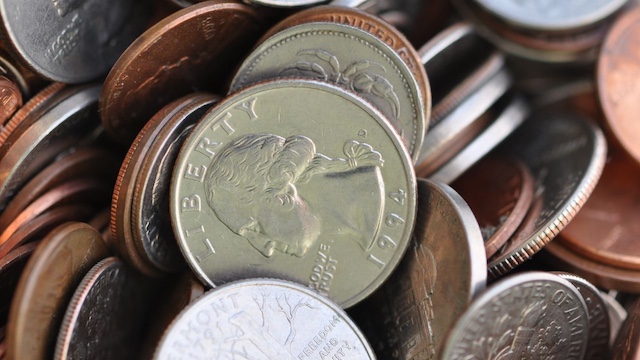 Toward the end of the video, Snyder shifted from diagnosis to advice. He suggested that people pay closer attention to the coins they already have, because some older U.S. coins may carry metal value or collector value beyond their face amount.
He specifically mentioned war nickels, which were minted during the 1940s and included silver content. He also reminded viewers that some older pennies and nickels contain more valuable materials than many people realize.
At the same time, Snyder cautioned that melting U.S. currency is illegal. His point was not that people should destroy coins, but that they should understand that some coins may become more interesting or valuable if the government keeps thinning out the lower-denomination end of the currency system.
That is a practical note, but it also reinforces the larger mood of the video. Snyder is not talking about the nickel disappearing as a random bureaucratic detail. He sees it as another signal that the economy is becoming more strained, more digitized, and more shaped by forces far beyond the checkout counter.
A Small Coin With A Bigger Meaning
Adam Snyder’s warning is ultimately about more than five cents.
In his view, the nickel is becoming another casualty of an economy where material costs, war-related supply problems, and government math no longer line up with old habits. If the penny could go, he says, the nickel is not far behind.
That does not mean its disappearance is certain tomorrow. But Snyder makes a decent case that the pressure is real and growing.
And that is what makes this story more interesting than it first appears. When a country starts deciding that even its coins are too expensive to keep, it says something about the cost of doing almost everything else too.
Written by Mark Harris for Survival World ~ April 22, 2026