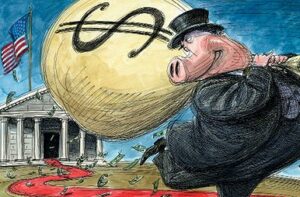
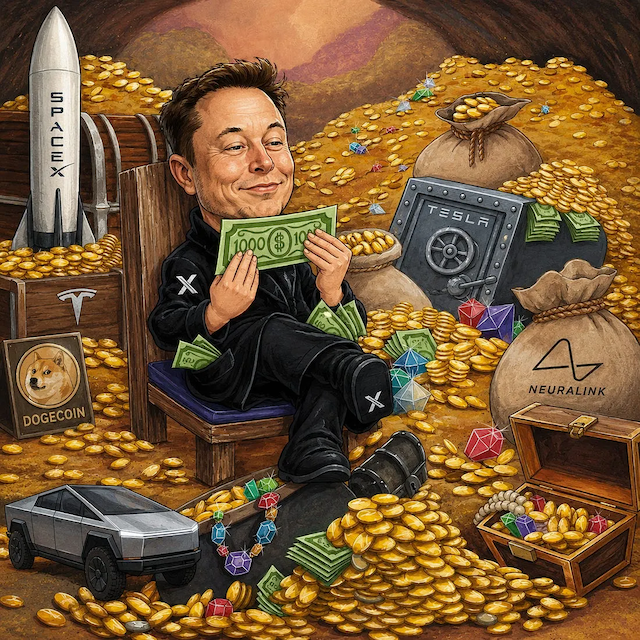
 In the shadowed annals of human striving, where fortune’s wheel turns with inexorable force, few spectacles provoke deeper unease than the concentration of unimaginable riches in a single pair of hands. A trillion dollars – more wealth than many nations command, a sum vast enough to dwarf the economies of continents – rests now, for the first time in history, within the grasp of one man. Elon Musk, that restless engineer of rockets and circuits, stands as the emblem of this milestone. Yet the achievement, while born of ingenuity and daring, stirs ancient moral qualms.
With plainspoken candor, I ask, just what does any one single person do with so much incredible wealth in his sole possession?”
And further, from my perspective and a litany of reasons, it still seems a bit unseemly and gross for any one person to horde so much around themselves when so many people do everything right and work hard day and night only to barely survive.”
These are not the envious cries of the leveler, nor the petulant demands of the redistributionist. They echo instead the deeper traditions of Western moral thought — conservative in their reverence for ordered liberty, rooted in free will, and insistent upon personal responsibility. Drawing from the rugged individualism of Robert W. Service and Rudyard Kipling, the Christian realism of C.S. Lewis, the Gospel of Wealth articulated by Andrew Carnegie, and the distributist warnings of G.K. Chesterton and Hilaire Belloc, we confront a truth both uncomfortable and timeless: while the right to acquire property is sacred, the unchecked amassing of colossal fortunes risks corrupting the soul, distorting society, and offending the very principles of stewardship that undergird a free and virtuous society striving towards a the good of all. To any moral being, a trillion in one hand is not merely statistically remarkable; it is a grotesque distortion demanding scrutiny.
Biblical verses, stripped of immediate theological overlay yet resonant with natural reason, captures this: “For unto whomsoever much is given, of him shall be much required” (Luke 12:48 KJV).
Wealth is not an end but a trust. Great talents, opportunities, and accumulations impose proportional duties. This is no call for state confiscation, which violates the liberty-minded imperative that government exists to secure rights, not dispense largesse. Rather, it is a summons to conscience. Carnegie, the steel titan who built empires yet gave away the better part of his fortune, insisted in The Gospel of Wealth that the rich man is but a steward. “The man who dies thus rich dies disgraced,” he wrote, advocating administration of surplus during life for public benefit — libraries, universities, parks. Musk’s own philanthropy, donating millions annually, gestures toward this, yet the sheer scale of his holdings invites the question: when does stewardship become hoarding? When does the trustee resemble the rich man in the parable, whose barns burst while Lazarus starves at the gate?
From a liberty perspective, the right to property flows from the Creator-endowed faculties of reason and labor. John Locke, that fountainhead of Anglo-American conservatism, grounded ownership in the mixing of one’s effort with the common stock of nature. Free will demands free exchange; voluntary contracts, innovation, and risk-taking must remain unmolested by envious majorities. Kipling celebrated this in tales of empire-builders and engineers who tamed wilderness through sweat and wit. Service’s “The Law of the Yukon” and poems of the Klondike gold rush portray men testing their mettle against harsh frontiers, where fortune rewards the bold.
Musk, tunneling beneath cities and hurling payloads toward Mars, embodies this pioneer spirit. His wealth reflects value created: reusable rockets lowering launch costs, electric vehicles accelerating energy transitions, neural interfaces promising medical breakthroughs.
Critics who decry billionaires while enjoying the fruits of their labor forget that poverty, not inequality, is the historic human default. As Thomas Sowell and others in the conservative intellectual tradition note, absolute mobility matters more than relative gaps.
Yet even rugged individualists recognized limits. Chesterton and Belloc, in their distributist critique, warned that capitalism unchecked tends toward monopoly and plutocracy, mirroring socialism’s concentration of power. In The Servile State, Belloc foresaw a society where a few own the means of production while the many sell their labor under duress — not through force of law, but economic necessity. Widespread property ownership, they argued, secures true liberty: the family with its own plot, the craftsman his tools, the worker his stake. A trillionaire, by contrast, commands resources so vast they reshape entire industries, media landscapes, and political incentives. Influence accrues not merely from ideas but from capital’s gravitational pull.
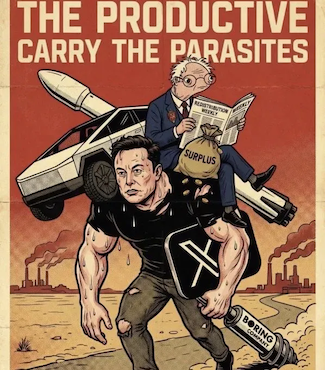 This is not envy speaking; it is the recognition that power, whether political or economic, tempts corruption. Lewis, in The Screwtape Letters and Mere Christianity, dissected how possessions breed pride — the “great sin” — wherein the wealthy begin to see themselves as self-sufficient gods. “Prosperity knits a man to the world,” he observed. The soul, meant for higher ends, fixates on ledgers and leverage.
Consider the practical obscenity. One trillion dollars, at conservative estimates, could fund the annual budgets of numerous mid-sized nations or eradicate certain global diseases multiple times over. What does one man do with it? Investment compounds it further; consumption on a personal scale reaches diminishing absurdity — private jets, estates, superyachts pale against the total. Excess becomes abstract, a scoreboard in a game without finish line.
Recently, one of my fine friends retorted in response to my questions rightly that Musk’s wealth does not directly impoverish others; in a growing economy, creation of value lifts boats. Yet the moral imagination recoils at disproportion. Gluttony, one of the seven deadly sins in the Christian tradition Lewis defended, is not merely overeating but disordered appetite. When survival demands of an individual — family, security, reasonable comfort — have long been met, continued accumulation for its own sake mirrors the hoarder who watches others starve amid plenty. Service’s prospectors in “The Shooting of Dan McGrew” chase gold with fevered eyes, but the poem’s tragedy lies in lives ruined by obsession. Kipling’s “If—” counsels keeping one’s head amid triumph and disaster alike, implying balance: wealth as servant, not master.
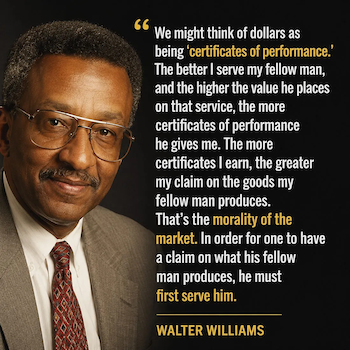 Conservatives cherish subsidiarity — the principle that problems are best solved at the most local level, beginning with the person, family, church, and community. Massive personal fortunes can bypass these, fostering dependency or top-down philanthropy that lacks the intimate knowledge of local needs. Carnegie funded institutions open to the deserving poor, emphasizing self-help. True charity, as Lewis emphasized, involves sacrifice of self, not merely writing checks from abundance. Musk’s giving is commendable, yet the persistence of his hoard raises whether even billions suffice for one life’s moral accounting.
“Each to their own,” I’ve often conceded.
However, in a republic of free men, public discourse on virtue remains essential. No one is owed a living, but neither is society indifferent to the character of its most successful. The hardworking American scraping by evokes Kipling’s “Tommy” or the common soldier — doing duty without fanfare. Their quiet dignity indicts not effort’s reward, but excess that mocks moderation.
History offers cautions. Rome’s latifundia concentrated land in few hands, eroding republican virtue and inviting bread and circuses. Medieval scholastics, influencing Chesterton, distinguished just price and usury from legitimate enterprise. Belloc championed the peasant proprietor against both feudal remnants and industrial behemoths. In our age of digital fiefdoms and regulatory capture, trillion-scale wealth amplifies risks: lobbying that bends rules, foundations wielding unelected power, cultural influence detached from accountability. Liberty demands vigilance against all concentrated power, public or private. Free will thrives where opportunity disperses widely, not funnels upward.
This is no brief for socialism, which has slain tens of millions through envy institutionalized. Nor does it deny that Musk’s pursuits — sustainable energy, multi-planetary civilization — may benefit posterity immensely. The objection is aesthetic and moral: grossness arises from disproportion. Nature abhors monopoly as much as vacuum; ecosystems flourish with diversity. A society where one man’s balance sheet rivals small countries’ GDPs strains the social fabric, breeding resentment even among the fair-minded.
My own unease – with greed and gluttony and those who take so much more from this Good Earth’s resources than they really need — taps Aristotelian temperance: the golden mean. Wealth beyond generational security becomes a burden on the soul, distracting from friendship, worship, contemplation — the goods Lewis ranked highest.
True conservatives, from Edmund Burke to Charlie Kirk, defend not mere market outcomes but the permanent things: faith, family, community, ordered liberty. They critique both radical individualism that severs man from obligations and collectivism that crushes personhood. A trillionaire tests this balance. He may deploy capital brilliantly, yet the sheer quantum invites the question Carnegie posed: what is enough?
For some, there is never any amount that they consider enough.
Curiosity about human nature reveals varied survival instincts — some content with sufficiency, others driven by cosmic ambition. Both have a place, yet morality demands accountability to something higher than spreadsheets.
The trillionaire phenomenon is historic, but not unequivocally celebratory. It challenges us to reaffirm stewardship without surrendering liberty. Encourage enterprise, protect property, celebrate creators like Musk who push humanity outward.
Simultaneously, cultivate virtue that views surplus as a trust for the commonweal — through philanthropy, investment in human flourishing, or devolution of wealth to wider ownership. No law should seize it; conscience and culture must guide. As Kipling urged mastery of oneself, and Service sang of men tested by fire, so must the wealthy master their fortunes lest fortunes master them.
To the moral being, excess of this magnitude is objectionable not because others lack, but because it risks warping the possessor and the polis alike. Much given demands much returned — not in coerced equality, but in generous, humble service to the civilization that made such ascent possible. Only thus does wealth ennoble rather than offend.
June 16, 2026

Justin O. Smith ~ Author
~ the Author ~
Justin O. Smith Has Lived in Tennessee Off and on Most of His Adult Life, and Graduated From Middle Tennessee State University in 1980, With a B.S. And a Double Major in International Relations and Cultural Geography – Minors in Military Science and English, for What Its Worth. His Real Education Started From That Point on. Smith Is a Frequent Contributor to the Family of Kettle Moraine Publications.